
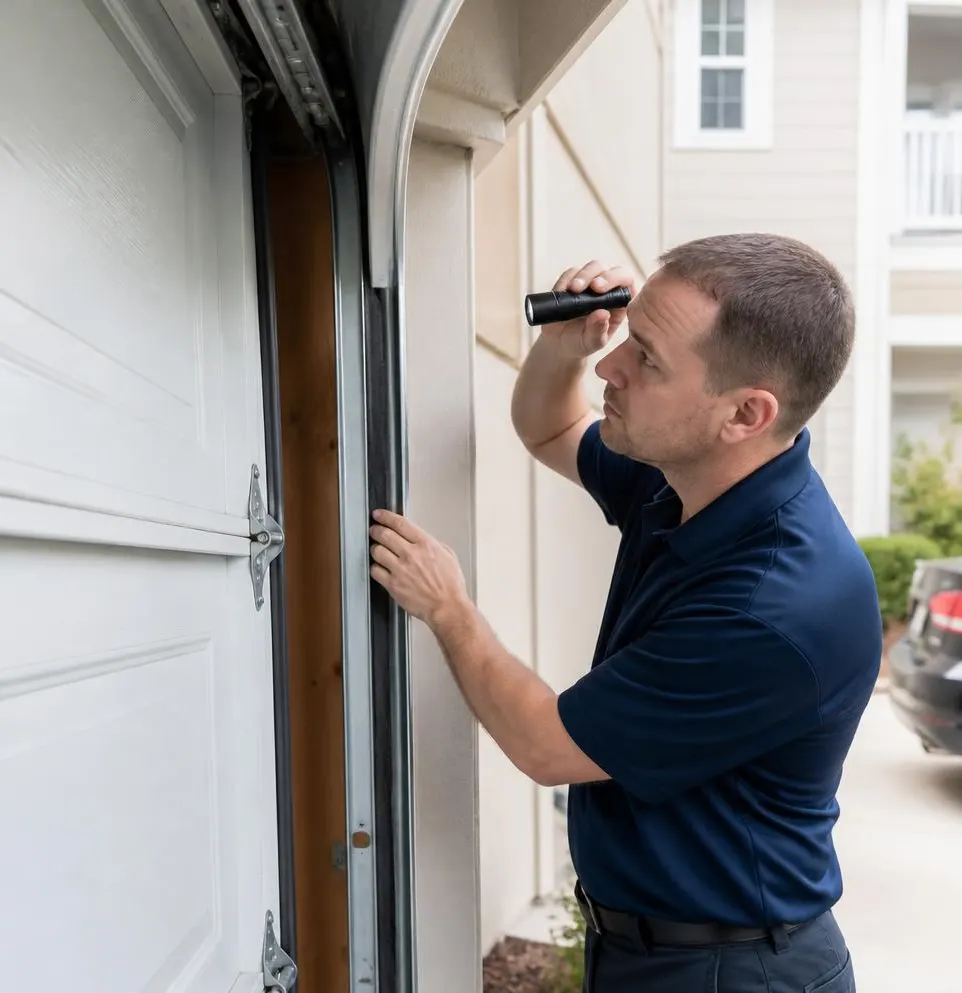
What We Find on a Typical "My Opener Just Died" Call
A service call usually starts the same way: the homeowner says the opener is grinding, the door reverses halfway up, or it closes slower than it used to. They assume the opener motor is wearing out. Nine times out of ten, the opener is fine. The door is unbalanced, and the opener has been straining against bad spring tension for months, sometimes years, before it finally throws a code or burns out a gear. On older homes around York County with original hardware from decades back, this is especially common — torsion springs lose tension gradually, and nobody notices until the opener starts paying the price.
How an Unbalanced Door Damages the Opener
A properly balanced garage door should feel almost weightless when it's disconnected from the opener and lifted by hand. The springs are doing nearly all the work of holding the door's weight; the opener's motor is only meant to provide a small push to get it moving. When springs weaken from age, from the freeze-thaw cycling that's hard on metal hardware all winter, or from basic wear after thousands of open-close cycles, that balance shifts. The door gets heavier from the opener's point of view, even though nothing about the door itself has changed.
The opener compensates by drawing more power, and the drivetrain — chain, belt, or screw — takes on load it wasn't engineered for. Over time this shows up as a stripped gear inside the opener head, a chain that slips or snaps, a trolley that disengages, or a motor that simply gives out early. Opener manufacturers typically rate these units for a certain number of cycles assuming correct spring balance; an unbalanced door can cut that lifespan dramatically. It also strains the opener's safety reversal system, which matters a lot with kids and pets in the house.
Why This Matters More Heading Into Winter
Cold temperatures stiffen lubricant, tighten metal, and make marginal spring tension worse almost overnight. A door that was borderline balanced in September can become noticeably unbalanced once overnight lows start dropping. Combined with salt and moisture working into hinges and tracks during a snowy stretch, this is the time of year balance problems turn into stuck doors or dead openers.
Tools You'll Need
- Step ladder (only if your door has a high pull-release cord)
- Work gloves
- A flashlight
- A helper is useful but not required
How to Test Garage Door Balance Yourself
- Close the door fully. Start from the closed position so you're testing the full range of motion.
- Locate the manual release cord — the red-handled cord hanging from the trolley on the opener rail — and pull it to disconnect the door from the opener. The door should now move independently of the motor.
- Lift the door by hand to about waist height, using the handle or bottom panel, and let go.
- Watch what happens. A balanced door will stay roughly in place, maybe drifting a few inches. An unbalanced door will either slide down on its own or shoot upward.
- Repeat the test at a few different heights — a few inches off the floor, waist height, and near fully open. Some doors are balanced in one position and clearly off in another, which tells you a lot about which spring or cable is the problem.
- Reconnect the opener by pulling the release cord again (or following your opener's reconnect procedure) once you're done, and run the door through a full cycle to confirm it's engaged properly before leaving it.
What a Homeowner Can Safely Do
The lift test above is safe for anyone to perform. You can also visually check — without touching — for frayed cable strands near the bottom brackets, a spring that looks stretched or gapped compared to its neighbor, or rollers that look worn or cracked. All of that is useful information to have before you call anyone.
What Needs a Technician
Adjusting spring tension, replacing a spring, or doing any work on the cables, drums, or bottom brackets is not a homeowner job. Torsion springs in particular are wound under enough stored force to cause serious injury if they let go while someone's working on them without the right bars and clamps. If your balance test shows a problem, the fix itself belongs to a trained technician, not a weekend project.
When to Call Red Lion Garage Door
If your door fails the lift test, slams down, shoots up, or you're already hearing opener strain — grinding, slow travel, inconsistent reversal — it's time to call. We'll run a full diagnostic on spring tension, cables, and track alignment, and if the springs are the culprit, our Spring Replacement service gets the door back to proper balance with hardware matched to your door's weight and size. For doors that are balanced but showing age — stiff hinges, worn rollers, winter grime in the tracks — our Garage Door Maintenance service catches those issues before they turn into an opener replacement.
If you're in Red Lion, Dallastown, York, Windsor, Felton, Stewartstown, Shrewsbury, or Spring Grove and your garage door doesn't pass the balance test, give Red Lion Garage Door a call before winter puts more load on that opener. We'll get it sorted and running the way it should.